Depth Psychology · Jungian Theory
The Complete Guide to Jungian Archetypes
Have you ever watched a movie and felt an instant, unexplainable connection to a character — the reluctant hero, the wise mentor, the misunderstood rebel? Have you ever had a dream so vivid it stayed with you for days, as if something deep inside was trying to tell you something?
That pull is not random. According to Carl Jung, one of the most influential psychologists of the twentieth century, it comes from something hardwired into all of us — patterns he called archetypes.
Jung believed that beneath the surface of our everyday personalities lies a vast, shared psychological landscape. He called it the collective unconscious. And within it live universal images, symbols, and stories that have shaped human behavior since the beginning of time. These are the Jungian archetypes — and understanding them might be the single most powerful step you take toward understanding yourself.
This guide will walk you through what Jungian archetypes actually are, where they come from, which ones matter most, and how you can use them for genuine self-reflection and personal growth. No jargon. No academic gatekeeping. Just clear, honest writing about ideas that have changed millions of lives.
"Who looks outside, dreams; who looks inside, awakes."
— Carl JungWhat Are Jungian Archetypes, Exactly?
An archetype, in the simplest terms, is a recurring pattern. Not a personality type. Not a label. A pattern — an invisible blueprint that shows up again and again in myths, religions, fairy tales, dreams, and everyday life across every culture in human history.
Carl Jung introduced the concept in the early twentieth century as part of his work in analytical psychology, also known as depth psychology. He noticed that his patients — regardless of background, education, or nationality — kept producing the same kinds of symbols in their dreams and fantasies. Serpents. Wise old figures. Dark shadows. Floods. Children. These were not coincidences. They were evidence, Jung argued, of something deeper: a shared psychological inheritance that belongs to all human beings.
"The archetype is essentially an unconscious content that is altered by becoming conscious and by being perceived, and it takes its colour from the individual consciousness in which it happens to appear."
— Carl Jung, The Archetypes and the Collective UnconsciousArchetypes are not fixed characters you can neatly slot yourself into. They are living forces within the psyche — patterns of energy that influence how you think, feel, relate to others, and make sense of the world. They shift. They evolve. They have light sides and dark sides. And most of the time, you are not even aware they are at work.
That is precisely why they matter.
The Collective Unconscious: Where Archetypes Live
To understand Jungian archetypes, you need to understand where they come from. Jung proposed that the human psyche has three layers.
The first is the conscious mind — your everyday awareness, your ego, the thoughts and decisions you are aware of right now.
The second is the personal unconscious — your individual memories, repressed feelings, forgotten experiences. Think of it as your private psychological storage room.
The third — and this is where Jung's thinking becomes radical — is the collective unconscious. This is not your private storage room. It is a shared basement that belongs to all of humanity. It contains the accumulated psychological experience of the entire human species, encoded not in words or memories, but in images, instincts, and patterns.
"The collective unconscious contains the whole spiritual heritage of mankind's evolution, born anew in the brain structure of every individual."
— Carl JungArchetypes are the contents of this collective unconscious. You did not learn them. You were born with them. They are the reason a child who has never read a fairy tale still fears the dark. They are the reason every culture on earth has stories about heroes, floods, tricksters, and wise elders.
Jung's Core Archetypes of the Psyche
Here is something most articles on the internet get wrong: Jung never created a neat list of twelve archetypes. That numbered list — the Hero, the Sage, the Rebel, and so on — came later, from authors like Carol S. Pearson and others who adapted Jung's ideas for branding and storytelling. Those frameworks are useful, and we will get to them. But they are Jungian-inspired, not Jungian-originated.
What Jung himself identified were structural archetypes — universal patterns that form the actual architecture of the human psyche. These are the ones that matter most for genuine self-understanding, shadow work, dream analysis, and the process Jung called individuation.
The Persona
The persona is the mask you wear in public. It is the version of yourself you present at work, at family dinners, on social media. The word itself comes from the Latin for "mask" — the same root as "personality."
Everyone has a persona, and there is nothing inherently wrong with it. You need a social mask to function in the world. The problem arises when you confuse the mask with your true self. When you start believing you are only the polished, acceptable version of yourself, you cut off access to everything underneath — the messy, contradictory, deeply human parts of your psyche.
"The mirror does not flatter, it faithfully shows whatever looks into it; namely, the face we never show to the world because we cover it with the persona, the mask of the actor."
— Carl Jung, The Archetypes and the Collective UnconsciousSelf-reflection begins the moment you ask: who am I when no one is watching?

The Shadow
If there is one Jungian archetype that has entered popular culture, it is the Shadow. And for good reason — it is arguably the most important concept in depth psychology for personal growth.
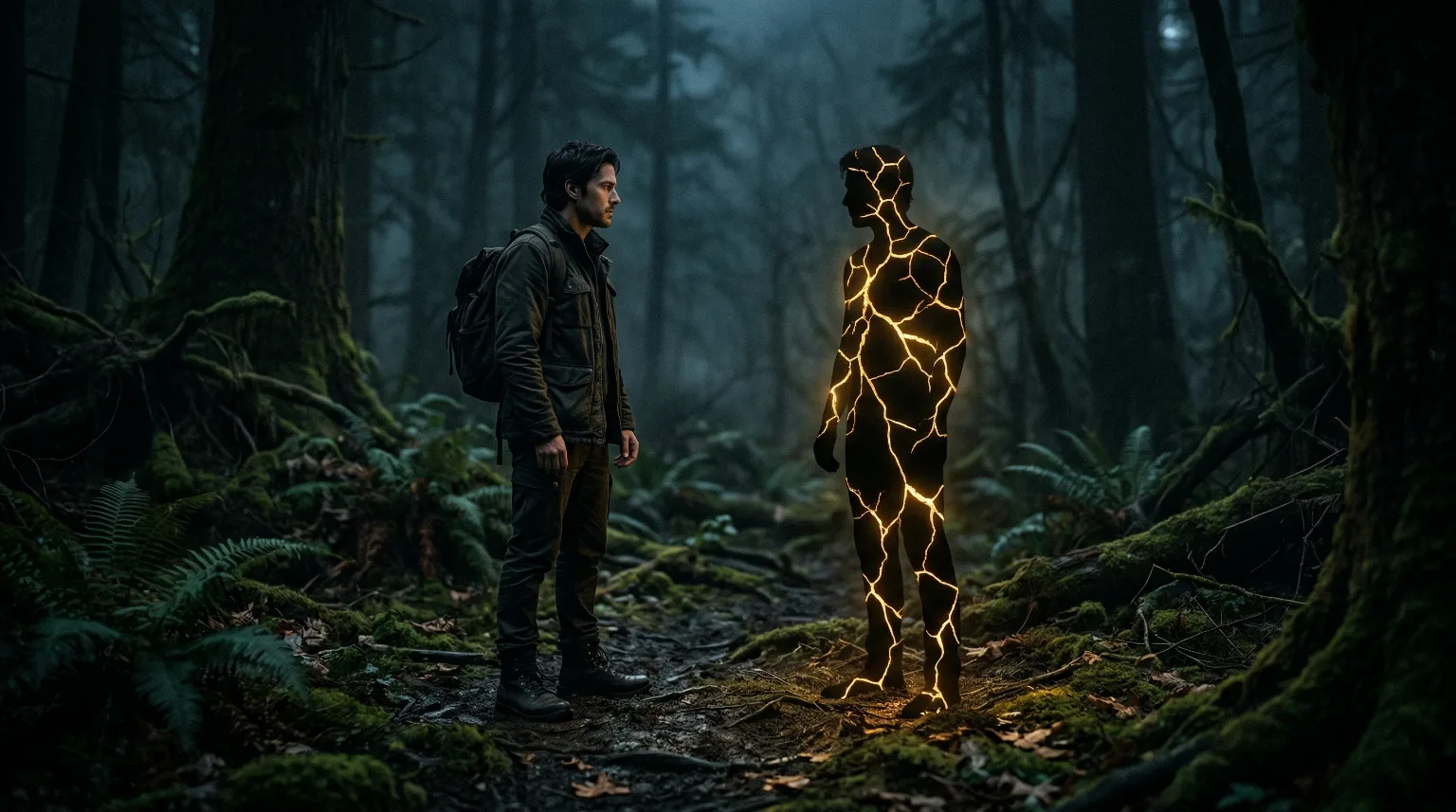
The Shadow is everything about yourself that you have pushed out of awareness. The traits you consider unacceptable. The emotions you were taught to suppress. The desires you are ashamed of. The anger, jealousy, selfishness, vulnerability, and wildness that do not fit the image your persona is trying to project.
"Everyone carries a shadow, and the less it is embodied in the individual's conscious life, the blacker and denser it is."
— Carl JungHere is the part most people miss: the Shadow is not evil. It is simply unconscious. And because it is unconscious, it controls you from behind the scenes. It shows up in your emotional overreactions, your irrational dislikes, your recurring relationship patterns, and your most disturbing dreams.Shadow work — the practice of consciously exploring and integrating these rejected parts — is one of the most powerful tools for personal transformation. It does not mean acting on every dark impulse. It means acknowledging that those impulses exist, understanding where they come from, and choosing how to relate to them with awareness rather than denial.
"One does not become enlightened by imagining figures of light, but by making the darkness conscious."
— Carl JungThis is why so many people are drawn to shadow work today. It is not about positivity. It is about honesty.
The Anima and Animus
The Anima is the feminine principle within the male psyche. The Animus is the masculine principle within the female psyche. Together, they represent the "inner opposite" — the contrasexual aspect of your personality that lives in the unconscious.
These archetypes profoundly influence how you experience attraction, intimacy, creativity, and emotional depth. When you fall in love at first sight, Jung would say you are not seeing the other person clearly — you are projecting your Anima or Animus onto them. When a man is suddenly overwhelmed by irrational mood swings, or a woman finds herself rigidly attached to abstract opinions she cannot explain, the Anima or Animus may be at work.
Jung recognized that every human being carries both masculine and feminine qualities. The goal is not to suppress one in favor of the other, but to integrate both — to become psychologically whole. This idea, radical in Jung's time, resonates deeply with modern conversations about identity and authenticity.
It is worth noting that Jung's specific language about gender reflects the early twentieth century. Today, many depth psychologists interpret the Anima and Animus more broadly — as the unfamiliar, underdeveloped, or unconscious side of the personality, regardless of biological sex.
The Self
The Self — capitalized to distinguish it from the everyday "self" — is the archetype of wholeness. It is the totality of the psyche: conscious and unconscious, light and dark, masculine and feminine, known and unknown. If the ego is the center of your conscious awareness, the Self is the center of your entire psychological being.
Jung described the Self as the ultimate goal of individuation — the lifelong process of becoming who you truly are by integrating all the scattered, conflicting parts of your psyche into a unified whole. You never fully reach it. But the journey toward it is what gives life its depth and meaning.
The Self often appears in dreams as symbols of wholeness: a mandala, a circle, a diamond, a child, or a wise figure who seems to embody a calm authority beyond the ego.
"Conscious and unconscious do not make a whole when one of them is suppressed and injured by the other. If they must contend, let it at least be a fair fight with equal rights on both sides."
— Carl Jung, The Archetypes and the Collective Unconscious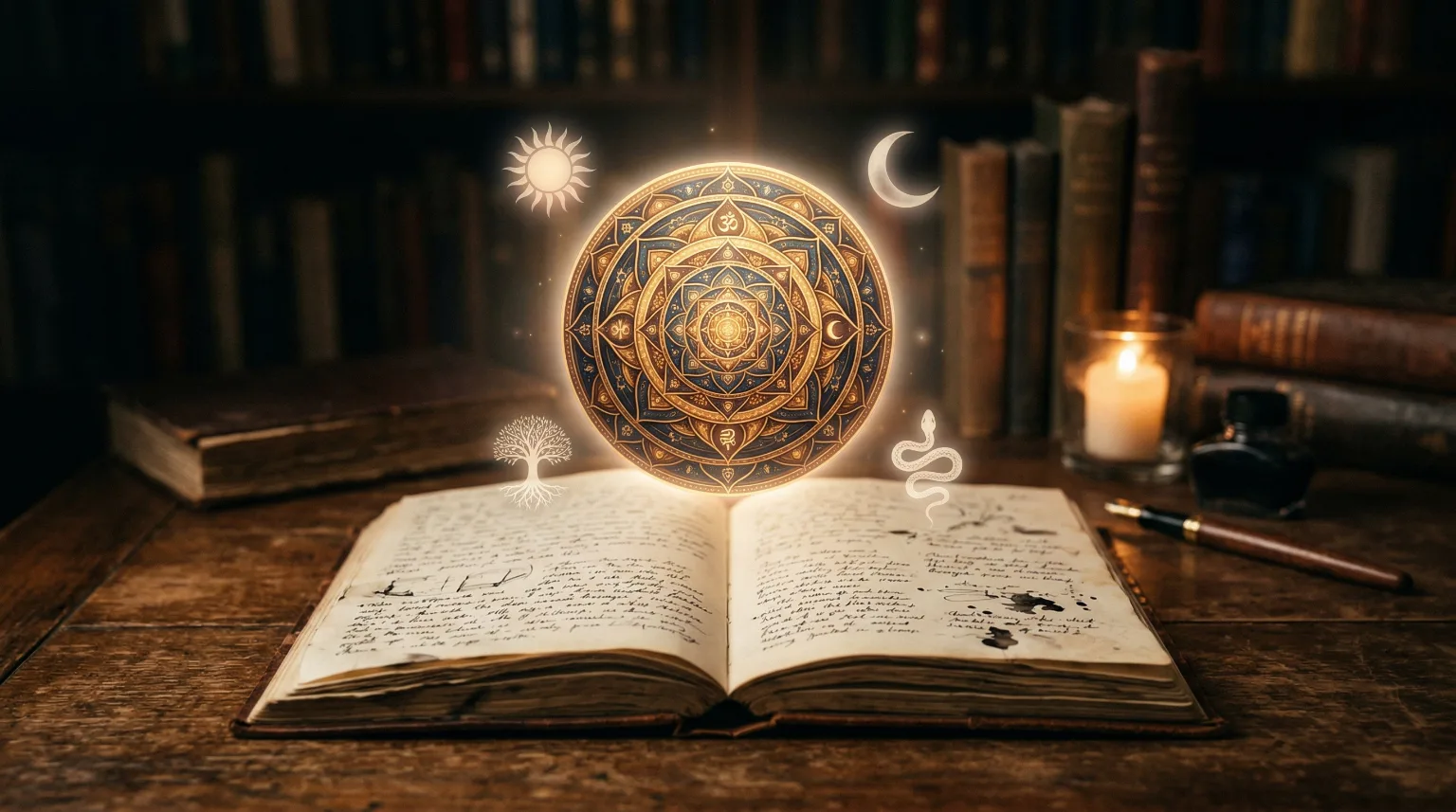
The Character Archetypes: Figures Jung Actually Wrote About
Beyond the structural archetypes, Jung identified recurring figures that appear in myths, dreams, and stories worldwide. These are not personality types — they are symbolic images that carry specific psychological energy.
The Hero
The Hero is the archetype of courage, struggle, and transformation. Every culture has hero myths — from Odysseus to Luke Skywalker — because the hero's journey mirrors the psychological journey of facing challenges, overcoming fear, and growing through adversity.
In your inner life, the Hero appears when you are called to confront something difficult: leaving a toxic relationship, starting over, speaking a truth you have been avoiding. The Hero's shadow side is arrogance, recklessness, or a compulsive need to prove oneself.
The Great Mother
The Great Mother embodies both nurturing care and destructive power. She is the source of life and the force that can consume it. In myths she appears as the loving earth goddess and the devouring witch — two faces of the same archetype.
Psychologically, the Great Mother represents your relationship with nurturing, dependency, protection, and the fear of being swallowed by something larger than yourself.
The Wise Old Man
The Wise Old Man appears in dreams and stories as a mentor, a guide, a sage who offers crucial knowledge at a turning point. Gandalf. Dumbledore. Yoda. These fictional characters tap into this archetype because we all carry within us the image of a figure who knows more than our conscious mind does.
In depth psychology, this archetype connects to the deeper wisdom of the unconscious — the part of you that already knows the answer, even when your ego is still struggling with the question.
The Trickster
The Trickster is the rule-breaker, the provocateur, the one who disrupts order to reveal hidden truths. Think of Loki in Norse mythology, or the coyote in Native American stories.
Jung connected the Trickster to the early stages of Shadow awareness. The Trickster makes you laugh at yourself, punctures your inflated ego, and forces you to see what you have been avoiding. In dreams, trickster energy often appears as absurd or chaotic scenarios that leave you confused — and that confusion is the point.
The Child
The Child archetype represents new beginnings, potential, innocence, and vulnerability. It is the part of you that is still open to wonder, still capable of seeing the world with fresh eyes.
It is also the part that carries your earliest wounds. Working with the Child archetype often means reconnecting with a vulnerability you buried long ago — and discovering that it holds the key to your creative and emotional vitality.
The Maiden (Kore)
The Maiden symbolizes purity, transformation, and awakening. In Greek myth, she is Persephone — the young goddess who descends into the underworld and returns changed. The Maiden archetype represents transitions, thresholds, and the courage to step into the unknown.

The Popular 12-Archetype Framework: Useful, But Not Jung’s
You have probably seen lists with titles like "The 12 Jungian Archetypes." These typically include the Innocent, the Orphan, the Hero, the Caregiver, the Explorer, the Rebel, the Lover, the Creator, the Jester, the Sage, the Magician, and the Ruler.
This framework was developed primarily by Carol S. Pearson in her books Awakening the Heroes Within and The Hero and the Outlaw. It draws on Jungian principles but organizes them into a practical system for understanding motivation and personality — especially in branding and storytelling.
These twelve archetypes are valuable. They give you accessible language to describe patterns you recognize in yourself and others. Here is a brief overview:
The Innocent seeks safety and happiness and fears doing something wrong. The Orphan (Everyman) wants connection and belonging and fears being left out. The Hero wants to prove worth through courage and fears weakness. The Caregiver is driven to protect others and fears selfishness. The Explorer craves freedom and new experience and fears being trapped. The Rebel seeks revolution and fears powerlessness. The Lover desires intimacy and fears rejection. The Creator strives to build something of enduring value and fears mediocrity. The Jester lives for joy and humor and fears boredom. The Sage hungers for truth and fears being misled. The Magician wants to make dreams real and fears unintended consequences. The Ruler seeks control and order and fears chaos.
Each of these archetypes has a light side and a shadow side. You carry all of them in varying proportions. The question is not "which one am I?" — it is "which ones am I avoiding, and what would happen if I let them in?"
That is where the real self-discovery begins.
Individuation: The Journey Toward Your Whole Self
If archetypes are the map, individuation is the journey.
Individuation is Jung's term for the lifelong process of integrating the unconscious parts of your personality into conscious awareness. It is not about becoming perfect. It is about becoming whole — which means embracing your contradictions, your shadow, your unfinished business, your unlived potential.
The process typically unfolds in stages. First, you become aware of your persona and begin to question the mask you have been wearing. Then you encounter your shadow — the parts of yourself you have been denying or projecting onto others. Next comes the confrontation with the anima or animus — your inner opposite. And finally, you move toward the Self, the archetype of wholeness and integration.
This is not a linear path. It is messy, cyclical, and often painful. But it is also the most rewarding psychological work a human being can do.
"Real liberation comes not from glossing over or repressing painful states of feeling, but only from experiencing them to the full."
— Carl JungIndividuation does not happen in isolation. It happens through reflection — through journaling, dream analysis, honest conversation, and the willingness to sit with discomfort long enough to learn from it. If you are looking for a place to begin, the Soulink Help page explains how each guide can support the process.

Archetypes in Your Dreams
Dreams were central to Jung's work. He saw them not as random noise, but as messages from the unconscious — letters you have not opened yet. And the language of those letters is archetypal.
When you dream of being chased by a dark figure, that is often your Shadow. When a mysterious, magnetic stranger appears in a dream, that may be your Anima or Animus. When you dream of a wise teacher or a neglected child, those are archetypal images asking for your attention.
Dream analysis — the practice of carefully examining dream symbols and connecting them to your waking life — is one of the oldest and most effective tools for self-reflection. Jung believed that every dream compensates for something missing in your conscious attitude. If you are being too rigid, your dreams may send chaos. If you are avoiding grief, your dreams may bring floods.
"The dream is a little hidden door in the innermost and most secret recesses of the soul."
— Carl JungLearning to read your dreams is learning to listen to yourself at the deepest level. It is not about dream dictionaries or universal symbol charts. It is about developing a personal, honest relationship with your own unconscious mind.
Why Jungian Archetypes Matter Today
We live in a time of noise. Social media, algorithms, and constant stimulation pull our attention outward. We curate personas. We perform identities. We scroll past our own inner lives without stopping to ask: who am I really, beneath all of this?
Jungian archetypes offer a way back in.
They are not a trend. They are not a personality quiz. They are a psychological framework that has been tested across cultures and centuries — a framework that says: you are deeper than you think. Your personality is not the whole story. Your shadow has something to teach you. Your dreams are trying to help you. And the path to a more authentic, meaningful life runs through the parts of yourself you have been avoiding.
This is why depth psychology — the tradition Jung founded — continues to gain relevance. As AI and technology reshape the surface of our lives, the need for genuine inner work only grows. People are searching for tools that help them reflect honestly, face their patterns, and grow. Not more content. More depth.
How to Start Exploring Your Archetypes
You do not need a degree in psychology to begin working with Jungian archetypes. Here are a few honest starting points.
- Start with your shadow. Pay attention to what triggers strong emotional reactions — irritation, judgment, envy. These reactions often point to shadow material. Ask yourself: what quality in this other person am I refusing to see in myself?
- Keep a dream journal. Write down your dreams as soon as you wake up, even if they seem meaningless. Over time, patterns will emerge — recurring figures, symbols, themes. These are your archetypes speaking.
- Reflect on the roles you play. Which persona do you wear most? What would happen if you took the mask off? What are you afraid people would see?
- Notice your projections. When you idealize or demonize someone, you may be projecting an archetype onto them — your anima, your shadow, your hero. Ask: what does this person represent inside me?
- Read Jung directly. Start with Man and His Symbols — written for a general audience and the best introduction to his thought. Then move to The Archetypes and the Collective Unconscious if you want to go deeper.
Or talk to someone — or something — that can reflect your inner world back to you.
Explore Your Archetypes with Soulink
Dr. J — The Depth Analyst is Soulink's dream and depth specialist. Describe what you are working through, and it will walk through the symbols, emotions, and archetypal patterns with you — the way a Jungian analyst would.
All sessions are encrypted and stored on EU servers. Your data is never sold and never used to train AI models. This is your private space. Start free — 100 credits, no credit card needed.
Explore with Dr. J →
Sources and Further Reading
- Carl Jung, The Archetypes and the Collective Unconscious (Collected Works, Vol. 9i), Princeton University Press, 1959.
- Carl Jung, Man and His Symbols, Doubleday, 1964.
- Carl Jung, Aion: Researches into the Phenomenology of the Self (Collected Works, Vol. 9ii), Princeton University Press, 1959.
- Carl Jung, Symbols of Transformation (Collected Works, Vol. 5), Princeton University Press, 1956.
- Carol S. Pearson, Awakening the Heroes Within: Twelve Archetypes to Help Us Find Ourselves and Transform Our Lives, HarperCollins, 1991.
- Carol S. Pearson and Hugh K. Marr, PMAI Manual: A Guide for Interpreting the Pearson-Marr Archetype Indicator Instrument, Center for Applications of Psychological Type, 2003.
- Jon Mills, "The Essence of Archetypes," International Journal of Jungian Studies, 10(3), 2018.