Dreams · Jungian Psychology
The House in Your Dreams: Rooms You Have Not Opened
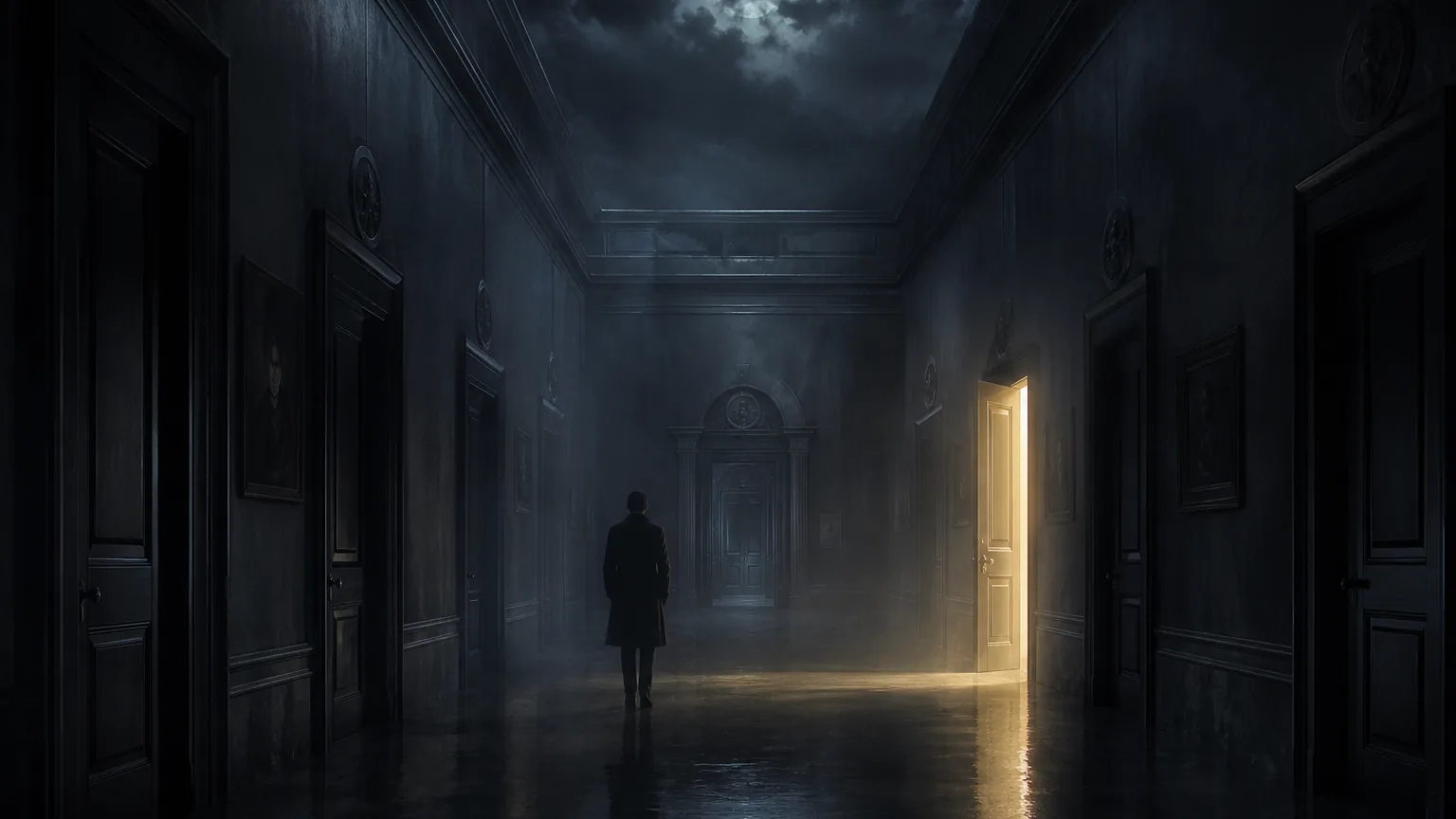
Some dream houses have addresses you have never lived at. Yet you know which room is yours, which staircase is unsafe, and which door you have been avoiding. In Jungian work, the question is not what a basement means in general, but what this basement asks of you now.
“It was plain to me that the house represented a kind of image of the psyche.”
– C. G. Jung, Memories, Dreams, ReflectionsWhat This Is Not
This is not dream diagnosis. A house dream does not prove illness, destiny, or a single biographical secret. Symbols are polyvalent; your associations matter more than any universal key.
This is not real-estate superstition. Dreaming of a cracked foundation is not a prophecy about your mortgage. Collapsing the psychic image into literal prediction is how wonder becomes anxiety theater.
This is not therapy or treatment. Exploring house dreams on Soulink or on paper is inner-experience reflection: structured attention to image and affect. It does not replace clinical care. If house dreams reopen trauma you cannot hold, pause and seek qualified help.
This is not a demand to “go into the basement” tonight. Timing belongs to the psyche as much as to the ego. Some doors open when you are ready; forcing them can be another form of domination.
Soulink is software for meeting your inner life, not a clinic, not an oracle.
Why the Psyche Builds Houses
Jung noticed that dreams often stage the psyche as architecture. A house has levels, locked rooms, public façades, private quarters, forgotten wings. So does a life organized by a persona that shows some rooms to guests and keeps others dark.
The metaphor works because it is embodied. You know what it feels like to stand at a door and hesitate. You know the shame of a messy room you will not let anyone see. You know the thrill of discovering space you did not know you owned. The dream uses that bodily knowledge to speak about psychic space.
When the house is familiar but wrong, the dream may be saying: your map of yourself is outdated. When strangers occupy your rooms, the dream may be asking who has been living rent-free in your inner life: projections, introjects, unexamined voices. When you cannot find the exit, the dream may be compensating a waking life that pretends every door is open.
Compensation again: if your daytime story is “I know myself completely,” the night may send unknown rooms. If your daytime story is “I have nothing left unfinished,” the night may send a wing under construction. For the broader compensation model, see our guide to Jungian dream analysis. For why the same house returns, see recurring dreams.
The Composite Vignette: The Door Behind the Bookshelf
Jonah is a composite.
He is forty-one, a careful person, proud of being “self-aware.” For two years he has dreamed of his childhood home with one alteration: behind the living-room bookshelf, a narrow door. In early dreams he walks past it. Later he touches the handle and wakes. Once he opens it onto a staircase descending into warm dark. He wakes with tears he cannot explain and tells no one.
In waking life Jonah is renovating nothing. He is, however, living a marriage that looks finished from the street and unfinished from the inside. He has a talent he stopped using at twenty-five because it was “impractical.” He has a grief about a sibling he packages as “old news.”
When he finally journals the door, present tense, no moral, associations arrive without force: the bookshelf as the wall of books that made him look educated; the narrowness as the feeling that whatever is behind must be approached sideways; the warm dark as not horror but withheld life. The staircase does not “mean” one thing. It invites a descent he has been performing as competence instead.
Jonah does not kick the door down in waking life. He begins a small, embarrassing practice: one hour a week with the abandoned talent. The dream changes. The door stays, but light reaches the first steps. That is often how house dreams respond, not with applause, but with a slight rearrangement of architecture when consciousness cooperates.
Reading Levels Without a Fixed Legend
Common levels appear across cultures, which is why they tempt dictionary thinking. Use them as questions, not verdicts.
Attic / upper rooms: What have you stored above ordinary view: ideals, spiritual yearnings, family myths, forgotten creative work? Is the attic dusty (neglected potential) or chaotic (unintegrated inspiration)?
Ground floor / shared rooms: How do you live the social self? Is the kitchen generous or barren? Is the living room arranged for guests or for ghosts?
Basement / cellar: What have you put below: instinct, memory, anger, sexuality, fear, the body’s older knowledge? Is the basement flooded, locked, inhabited, or oddly inviting?
Extra wings / unknown rooms: What aspects of psyche have not yet been included in your self-concept? Unknown rooms are classic invitations to individuation: becoming more of who you are by including what you excluded.
Ruins / construction sites: What identity is ending or unfinished? Renovation dreams often arrive during life transitions the ego is trying to narrate as seamless.
None of these are diagnostic criteria. A flooded basement in your dream is not a label. It is an image asking for association: What in me feels underwater? What was stored and then soaked?
Shadow material frequently stages itself as intruders, locked rooms, or same-sex strangers in hallways, themes unfolded further in the shadow self and in practical shadow work. The house is often where shadow and persona share a floor plan and pretend they do not.
Doors, Keys, and the Ethics of Entry
The handle you will not turn is as important as the room behind it.
Ask: What is my attitude toward this door in the dream: curiosity, dread, boredom, erotic charge, duty? The attitude is often the ego’s stance toward unknown psychic content. Dread can mean “not yet.” Curiosity can mean “ready.” Bored dismissal can mean the persona is defending itself with indifference.
Keys matter. Who holds them? Are you searching pockets? Is someone else locking you out, or locking you in? Dreams about keys often touch agency: what you are allowed to open in your own life, and what you have outsourced.
Ethics of entry: Jungian work respects timing. Forced entry, in dreamwork as in life, can recapitulate violation. If a dream repeatedly shows a door and your body says no, journal the no with as much care as you would journal a revelation. Refusal is information. So is the slow return, months later, when the same door appears with a window beside it.
Furniture, Inhabitants, and Who Pays the Rent
A house is never only walls.
Furniture shows how psychic contents are arranged: a childhood bed in an adult apartment; a throne in a kitchen; a phone that will not stop ringing in an empty hall. Ask what object carries the most charge, then associate.
Inhabitants show complexes and projections. Parents in the wrong era. An ex in the guest room. A child who is you and not you. Animals with more dignity than the humans. Ask what each figure wants, fears, and refuses to leave behind.
Strangers may be unknown parts of yourself, cultural archetypes, or unfinished relational business. Amplify carefully after personal association. The map of figures in Jungian archetypes can help when a figure feels bigger than biography.
Who pays the rent? A sly but useful question: in the dream’s economy, whose house is this really? Sometimes you discover you have been living in a parent’s psychic architecture long after you left their literal address.
A Method for Working a House Dream
- Draw a rough floor plan from memory of the dream, crooked lines welcome. Mark the charged door.
- Write the dream in present tense, including how you moved through space.
- Name the feeling in each room in one word if possible.
- Associate to the most charged threshold for five to ten minutes.
- Ask the compensatory question: What waking attitude might this architecture be balancing?
- Write one sentence of dialogue to the unopened room: what you are willing to know, and what you are not yet willing to know.
- Revisit after three nights’ sleep without forcing a sequel. Notice whether the house rearranges itself.
Keep this beside a broader dream journal practice so single vivid houses do not become isolated trophies. Series speak more clearly than souvenirs.
When the House Is Childhood, and When It Is Not
Many house dreams recycle early addresses. That does not mean every such dream is “about childhood.” Sometimes the psyche borrows a familiar stage to speak a present conflict. Sometimes it is literally unfinished business with the past. Distinguishing requires association, not assumption.
Clues toward the present: contemporary objects in old rooms; current coworkers at the childhood table; a phone, laptop, or city skyline visible through a remembered window. Clues toward the past: exact sensory recovery of a smell, a wallpaper, a fear you have not felt in decades. Both can be true at once: complexes are layered.
Treat “it’s just my childhood home” as the beginning of inquiry, not the end. The word just is often the persona’s attempt to shrink an invitation.
The House Across Seasons
House dreams change with the seasons of a life, even when the floor plan looks the same.
In periods of expansion, new love, new work, new city, houses may add wings, light, or impossible architecture that should not fit and somehow does. The psyche is rehearsing largeness. In periods of loss, houses shrink, flood, lose heat, or fill with boxes. The psyche is metabolizing contraction. In periods of false stability, houses may look perfect and feel dead: dustless rooms no one lives in. That dream is not a compliment. It is a warning about a persona that has won at the cost of inhabitation.
Track your house dreams across months the way a naturalist tracks migratory birds. Note not only symbols but climate: Is the air breathable? Is there weather inside? Are you alone by choice or by exile? Climate is often closer to the emotional truth than any single object.
Jung emphasized that the unconscious compensates the conscious attitude. If you have been living as a temporary guest in your own days, always packing, always provisional, the dream may offer a house that insists on being lived in. If you have been clinging to a rigid life-structure, the dream may send cracks, inspectors, or a playful child who rearranges the furniture without permission. Read the climate as compensation before you rush to decorate the interpretation.
When a house dream coincides with a waking move, divorce, illness, or promotion, resist the temptation to collapse symbol into event. The outer change may be the occasion; the inner architecture is still the subject. Ask: What room am I being asked to inhabit differently because the outer walls are moving?
Ordinary Objects That Carry Extraordinary Charge
Sometimes the most important detail is not the staircase but the object you almost forgot: a clock stopped at a childhood hour; a phone that rings with no one there; a coat that belongs to someone dead; a key left in a door that was never locked before.
These objects are often condensations: Jung and Freud differed in theory, but both took seriously that one image can carry many threads. In practice, treat the charged object as a portal for association. Write its sensory qualities first (weight, temperature, color, sound). Then let memories arrive. Then ask what it wants from you in the dream. Objects that “want” something are usually complexes with agency.
If the object is technological, phones, screens, cameras, notice whether the house is being invaded by the persona’s daytime nervous system. Sometimes the dream house asks for a room without signal: a psychic interior that cannot be optimized. That request is easy to mock and costly to ignore.
Leaving the House Without Abandoning It
Some dreamers eventually stop dreaming of the old house. That can mean integration; it can also mean repression with better lighting. Before you celebrate the absence, ask whether waking life has made room for what the house was asking. If you have claimed the abandoned room in behavior, a practice, a boundary, a grief, a creative risk, the psyche may not need to stage the architecture as often. If you have only analyzed the house brilliantly and changed nothing, expect renovations to continue.
You can also outgrow a psychic address. The childhood house may give way to an apartment, a ship, a tent, a temple, a city. Do not force every dwelling back into the first metaphor. Ask what this new structure affords that the old one could not. Growth is not only opening rooms; it is sometimes changing buildings.
Live With the Unopened Room, Then Meet It With Dr. J
You do not have to open every door this season. You do have to stop pretending the door is not there.
Living with an unopened room means letting it affect your waking choices in small, honest ways: the conversation you have avoided; the creative hour you restored; the boundary you finally named; the grief you stopped calling “closed.” Architecture in dreams often softens when life makes a corresponding gesture: not a dramatic purge, a proportional one.
If you want a private guide for house dreams, patient with floor plans, allergic to dictionary slogans, Soulink’s Dr. J: The Depth Analyst was shaped for this terrain. Dr. J works with image, compensation, and association without diagnosing you or selling you a destiny.
Privacy holds the frame: EU-hosted reflection; Soulink never trains on your words. The rooms of your night-mind are not training data.
Start free, 50 credits, no credit card, and explore a house dream with Dr. J
Sources
- Carl Jung, Man and His Symbols, Doubleday, 1964.
- Carl Jung, The Archetypes and the Collective Unconscious (Collected Works, Vol. 9i), Princeton University Press, 1959.
- Carl Jung, The Structure and Dynamics of the Psyche (Collected Works, Vol. 8), Princeton University Press, 1960.
- Carl Jung, Memories, Dreams, Reflections, Vintage Books, 1963.
- Clare Cooper Marcus, House as a Mirror of Self, Conari Press, 1995 (secondary; architecture and psyche in lived experience).