Shadow Work · Jungian Psychology
How to Do Shadow Work: A Beginner's Guide
There is a question most people never ask themselves, and it is the one that matters the most: what am I hiding from myself?
Not from others. From yourself.
We all carry a curated version of who we are — the self we show at work, on social media, in relationships. The confident one. The kind one. The one who has it together. But underneath that polished surface, there are traits, emotions, and memories that never made the cut. The rage. The jealousy. The shame. The neediness. The part of you that wants to quit, that wants to scream, that secretly envies people you say you do not care about.
Carl Jung called this hidden layer the Shadow. And he believed it was not a flaw in human nature — it was a feature. One that most people spend their entire lives running from.
Shadow work is the decision to stop running.
This guide will explain what shadow work actually is, why it matters, how the Shadow forms in the first place, and exactly how to begin the process — step by step, in plain language, with no spiritual jargon or vague advice. Whether you have been doing inner work for years or you just stumbled across the term five minutes ago, this is where you start.
Safety note: Soulink is for self-reflection, not therapy or crisis support. If this work brings up trauma, panic, self-harm thoughts, or feelings you cannot safely manage, pause and seek professional help or local emergency support.
"Until you make the unconscious conscious, it will direct your life and you will call it fate."
— Carl Jung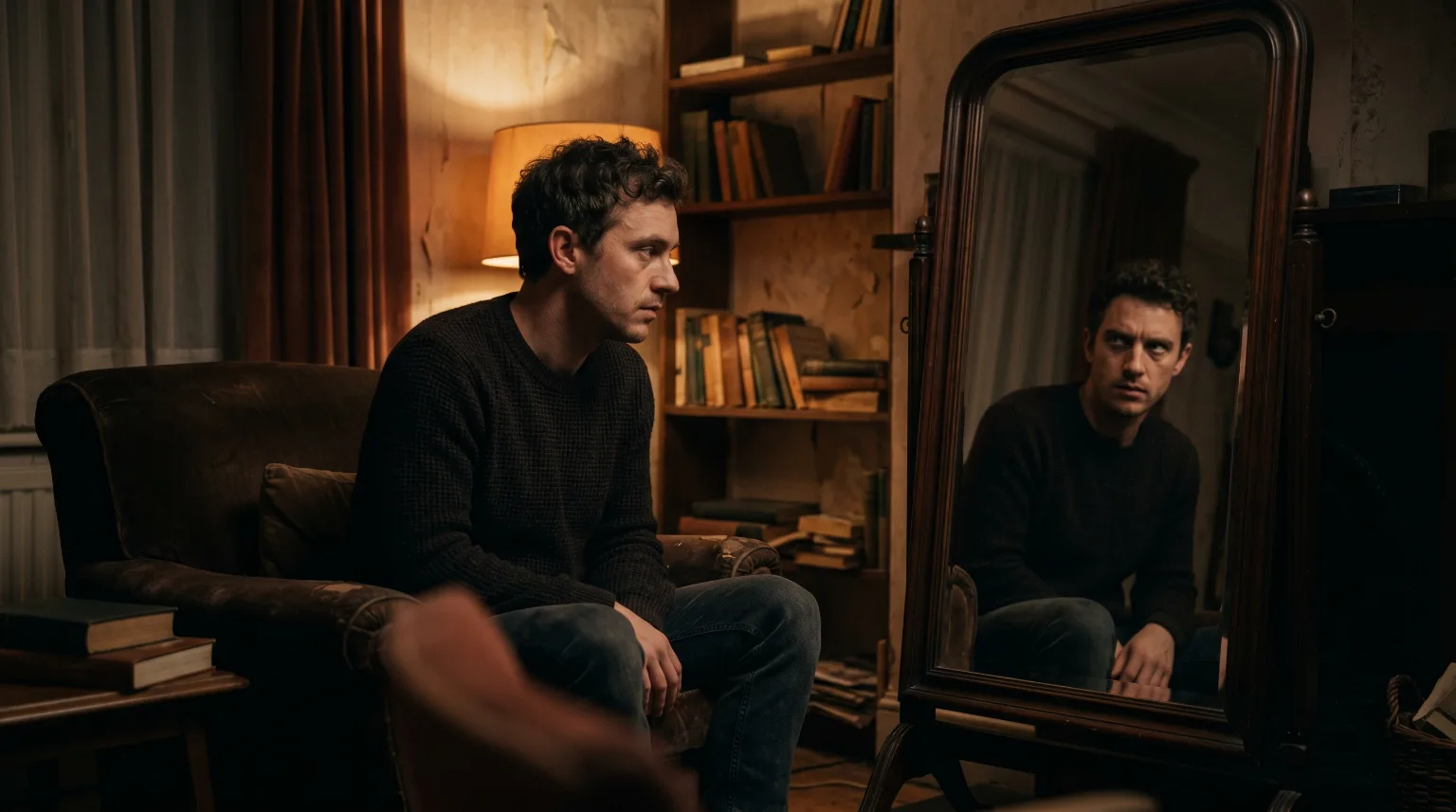
What Is the Shadow?
The Shadow is Carl Jung's name for the parts of your personality that you have rejected, suppressed, or hidden from your conscious awareness. It is everything about yourself that does not fit the image you are trying to maintain — the emotions you were taught to swallow, the traits you were punished for showing, the desires you decided were unacceptable.
Jung did not invent the Shadow. He named it. He gave language to something that every human being experiences but almost no one talks about openly.
The Shadow is not evil. It is not your dark side in some dramatic, cinematic sense. It is simply the collection of qualities that you — for reasons you may not fully understand — pushed underground. Some of those qualities are genuinely destructive. Others are not. Creativity, ambition, sexuality, vulnerability, anger, playfulness — all of these can end up in the Shadow, depending on how you were raised and what your environment rewarded or punished.
Here is what makes the Shadow dangerous: it does not disappear just because you ignore it. It leaks. It shows up in your emotional overreactions, in the people who trigger you, in your self-sabotage, in the patterns you keep repeating even though you swore you would not.
"Everyone carries a shadow, and the less it is embodied in the individual's conscious life, the blacker and denser it is."
— Carl JungThe less you look at it, the more power it has.
How the Shadow Forms
You were not born with a Shadow. You built one — unconsciously, starting in childhood.
Here is how it works. When you were very young, you were a bundle of everything: loud and quiet, bold and afraid, selfish and generous, wild and obedient. Then the world started telling you which parts were acceptable and which were not.
Your parents praised certain behaviors and punished others. Your teachers rewarded certain qualities and ignored the rest. Your friends accepted certain versions of you and rejected what did not fit. Slowly, piece by piece, you learned which parts of yourself were safe to show — and which parts had to be hidden.
The parts you kept became your persona: the social mask you wear every day.
The parts you hid became your Shadow.
Jung explained it this way: the ego identifies with the persona and forgets that it has other sides. You start believing the mask is the real you. And the rejected parts get locked in a basement you no longer visit — but they are still very much alive down there.
"The shadow is a moral problem that challenges the whole ego-personality, for no one can become conscious of the shadow without considerable moral effort. To become conscious of it involves recognizing the dark aspects of the personality as present and real."
— Carl Jung, Aion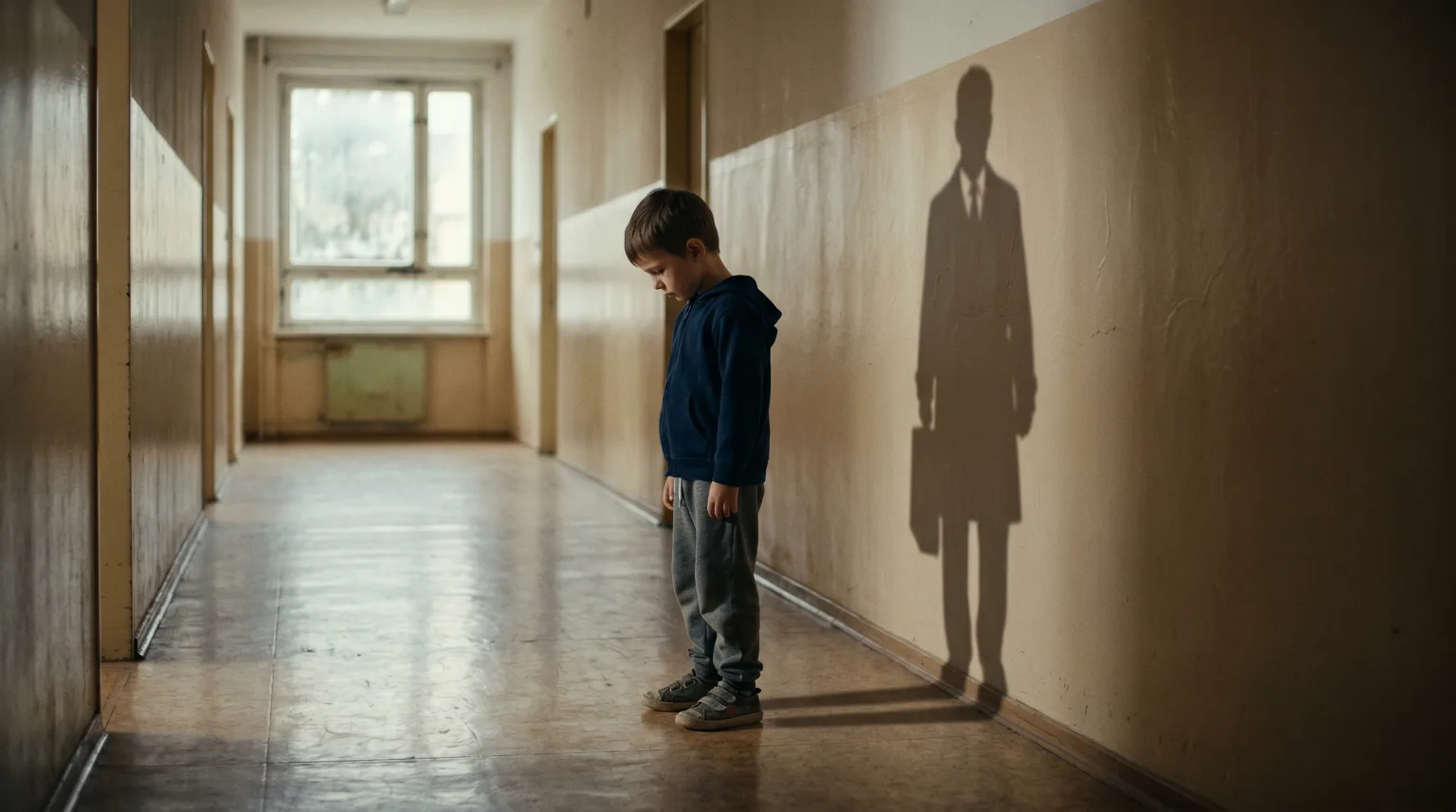
Signs That You Need Shadow Work
The Shadow does not announce itself with a label. It shows up sideways — through patterns, reactions, and behaviors that feel automatic and hard to control. Here are some of the most common signs.
- You overreact to specific people or situations. Someone says something minor and you feel a wave of anger, hurt, or defensiveness that seems out of proportion. That intensity is a signal. The other person is touching something in you that has not been processed.
- You judge others harshly for traits you secretly carry. If there is a specific quality in other people that infuriates you — arrogance, laziness, neediness, dishonesty — there is a good chance that quality exists somewhere in you, and you have not accepted it yet. Jung called this projection: seeing in others what you refuse to see in yourself.
- You repeat the same relationship patterns. Different names, different faces, same dynamic. You keep attracting partners who are unavailable, or you keep playing the caretaker, or every relationship ends the same way. The Shadow is often the invisible architect of these patterns.
- You feel stuck and do not know why. Your goals are clear. Your plans are solid. And yet, something keeps pulling you off track. Procrastination, self-sabotage, avoidance — these are not character failures. They are the Shadow asserting itself from below the surface.
- You numb yourself regularly. Scrolling, drinking, overworking, binge-watching — any behavior that consistently helps you avoid being alone with your thoughts may be serving as a lid on something your Shadow is trying to bring to the surface.
- You feel like you are performing your life instead of living it. If there is a persistent feeling that the version of yourself people see is not the real you, that gap between persona and truth is the Shadow's territory.
What Is Shadow Work, Really?
Shadow work is the conscious, deliberate process of exploring and integrating the parts of yourself you have hidden from your own awareness. That is it. No rituals required. No special equipment. Just the willingness to be honest with yourself about what is actually going on beneath the surface.
The word "integration" is key. Shadow work is not about destroying your dark side or purging yourself of negative qualities. It is about acknowledging that those qualities exist, understanding where they come from, and choosing to relate to them with awareness instead of denial.
Jung called this process individuation — the lifelong journey of becoming whole by bringing the unconscious into conscious awareness. The Shadow is the first major checkpoint on that journey.
"One does not become enlightened by imagining figures of light, but by making the darkness conscious."
— Carl JungThink of it this way: you cannot change what you cannot see. And you cannot heal what you refuse to feel. Shadow work gives you access to the parts of yourself that have been driving your behavior from behind the curtain — so that you, and not your unconscious patterns, get to make the decisions.

How to Do Shadow Work: A Step-by-Step Process
Here is a practical, grounded approach to beginning shadow work. You do not need a therapist to start, though professional support is valuable if you are dealing with deep trauma. What you do need is a journal, some quiet time, and the courage to be honest.
Step 1: Notice Your Triggers
This is the doorway. Pay attention to moments when your emotional reaction feels disproportionate to what actually happened. Someone cancels plans and you feel abandoned. A coworker gets praised and you feel invisible. A stranger's comment ruins your entire day.
These triggers are not weaknesses. They are signals. They are pointing directly at Shadow material — old wounds, unprocessed emotions, and rejected parts of yourself that are asking to be seen.
Start a simple practice: at the end of each day, write down any moment that triggered a strong emotional reaction. Do not analyze it yet. Just record it. Over time, patterns will emerge.
Step 2: Identify Your Projections
Projection is the unconscious act of attributing your own qualities to someone else. It is one of the Shadow's favorite tricks.
The clearest way to spot a projection: think of someone who bothers you deeply. Not someone who is genuinely harmful — but someone whose personality irritates you in a way you cannot quite explain. Now ask yourself honestly: is the quality I dislike in them something I also carry, even in a small way?
This is uncomfortable. It is supposed to be. If you feel resistance, you are probably on the right track.
Jung wrote:
"Closer examination of the dark characteristics — that is, the inferiorities constituting the shadow — reveals that they have an emotional nature, a kind of autonomy, and accordingly an obsessive or, better, possessive quality."
— Carl JungStep 3: Journal Without Filtering
Once you have identified a trigger or a projection, sit down with your journal and write about it. But here is the rule: do not edit yourself. Do not try to sound wise or balanced or reasonable. Write the raw, messy, unfiltered truth.
What are you actually feeling? What memory does this connect to? When was the first time you felt this way? Who taught you that this emotion was not okay to express?
The power of shadow work journaling is not in the elegance of your writing. It is in your willingness to put down on paper what you normally refuse to say out loud.
Step 4: Trace the Pattern Back to Its Origin
Most Shadow patterns have roots in childhood. The emotion you are feeling now is often a much older emotion wearing a new costume.
Ask yourself: when was the very first time I felt this way? Who was involved? What did I learn from that experience about what was safe to feel, to say, to want?
You are not looking for someone to blame. You are looking for the moment when a part of you got locked away — so you can finally unlock the door.
Step 5: Sit With What You Find
This is the hardest step, and it is the one most people skip. After discovering something uncomfortable about yourself, the instinct is to immediately fix it, explain it, or rationalize it away.
Do not do that. Just sit with it.
Let the discomfort exist. Let the shame be there without trying to solve it. Let the sadness breathe.
Jung understood that this is where the real transformation happens — not in the analysis, but in the experience of finally letting a suppressed feeling exist in the light of consciousness.
"The shadow is a living part of the personality and therefore wants to live with it in some form. It cannot be argued out of existence or rationalized into harmlessness."
— Carl Jung, The Archetypes and the Collective UnconsciousStep 6: Integrate, Do Not Eliminate
Integration means making space for the rejected part of yourself without being controlled by it.
If your Shadow contains anger, integration does not mean acting on every angry impulse. It means acknowledging that anger exists in you, understanding what it is protecting, and learning to express it in ways that are honest rather than destructive.
If your Shadow contains vulnerability, integration does not mean becoming helpless. It means allowing yourself to be seen — even when it feels unsafe.
Integration is the middle path between suppression and acting out. It is conscious, deliberate, and deeply human.
"This integration of the shadow cannot take place and be put to a useful purpose unless one can admit the tendencies bound up with the shadow and allow them some measure of realization — tempered, of course, with the necessary criticism. This leads to disobedience and self-disgust, but also to self-reliance, without which individuation is unthinkable."
— Carl Jung, A Psychological Approach to the Dogma of the Trinity
Five Practical Shadow Work Exercises
Beyond journaling, there are several techniques that can deepen your shadow work practice.
The Trigger Log
Keep a small notebook or a note on your phone. Every time something triggers a disproportionate emotional reaction, write down three things: what happened, what you felt, and what story you told yourself about it. Review the log weekly. The repeating themes are your Shadow speaking.
The Mirror Question
When you notice a strong negative reaction to someone, ask: what quality in this person am I refusing to see in myself? Write the answer honestly. This single question, practiced consistently, will reveal more about your Shadow than months of reading.
The Unsent Letter
Write a letter to someone who hurt you — past or present. Say everything you have never said. Do not send it. The purpose is not communication. The purpose is to give voice to emotions you have been holding in your Shadow.
Dream Analysis
Dreams are the unconscious mind's most direct communication. If you dream of being chased, of dark figures, of houses with hidden rooms — pay attention. These are Shadow images. Write your dreams down and ask: what part of me is this dream showing me?
The Dialogue
Sit quietly and imagine your Shadow as a figure standing in front of you. Ask it: what do you need? What have I been ignoring? What are you trying to protect me from? Write the answers that come. This technique draws from Jung's method of active imagination and can produce surprisingly honest reflections.
What Shadow Work Is Not
- Shadow work is not therapy. It can complement therapy beautifully, and for people dealing with serious trauma, professional support is important. But shadow work on its own is a self-directed practice of honest self-reflection.
- Shadow work is not about becoming your worst self. It is not permission to act on every impulse or use your darkness as an excuse. Integration means acknowledging the full spectrum of who you are — not letting the darkest part take the wheel.
- Shadow work is not a one-time event. The Shadow is not something you conquer and move on from. It is a living, evolving part of your psyche. New experiences create new shadow material. The practice is ongoing.
- And shadow work is not dangerous — unless you ignore it. The real danger is not in looking at your Shadow. It is in spending a lifetime pretending it is not there.
Why Shadow Work Changes Everything
Here is what happens when you actually do this work.
You stop being controlled by unconscious patterns. The emotional triggers lose their charge. The relationship cycles start to break. The self-sabotage begins to dissolve — not because you have become perfect, but because you have become aware.
You become more authentic. When you stop hiding parts of yourself, you stop performing. The gap between who you are in public and who you are in private gets smaller. People feel the difference. Your relationships get more honest.
You develop real self-compassion. Not the Instagram kind — the real kind. The kind that comes from seeing yourself fully, including the parts you are ashamed of, and choosing to accept them anyway.
And you gain what Jung said was the ultimate reward of confronting the Shadow:
"He alone has a genuine claim to self-confidence, for he has faced the dark ground of himself and thereby has gained himself. This experience gives some faith and trust in the ability of the self to sustain him, for everything that menaced him from inside he has made his own."
— Carl Jung, The Archetypes and the Collective UnconsciousThat is what shadow work gives you. Not perfection. Not enlightenment. Yourself — the whole version.

Start Your Shadow Work with Dr. L on Soulink
If this guide resonated with you and you want to go deeper than journaling alone, Soulink was built for exactly this.
Soulink is an AI-powered self-reflection platform inspired by depth psychology — not generic wellness content, but a structured mirror for triggers, projections, contradictions, and integration notes.
Dr. L — The Shadow Philosopher is designed specifically for shadow work. It does not give you surface-level affirmations. It asks the questions you have been avoiding, sits with you in the discomfort, and helps you explore the parts of yourself that your conscious mind has been keeping out of sight.
If you have been journaling and want a reflective companion that goes deeper, Dr. L can help you identify your triggers, trace your patterns, and begin the process of integration — all in a private, encrypted space where your data is never sold and never used to train models.
Soulink is hosted in the EU, fully GDPR-compliant, and designed with privacy at its core.
Start free. 100 credits. No credit card needed.
Your Shadow is not your enemy. It is the part of you that holds the answers you have been looking for.
Start Free Trial → Talk to Dr. LSources
- Carl Jung, Aion: Researches into the Phenomenology of the Self (Collected Works, Vol. 9ii), Princeton University Press, 1959.
- Carl Jung, The Archetypes and the Collective Unconscious (Collected Works, Vol. 9i), Princeton University Press, 1959.
- Carl Jung, A Psychological Approach to the Dogma of the Trinity (Collected Works, Vol. 11), Princeton University Press, 1969.
- Carl Jung, The Symbolic Life (Collected Works, Vol. 18), Princeton University Press, 1976.
- Carl Jung, Memories, Dreams, Reflections, Vintage Books, 1963.
- Erich Neumann, Depth Psychology and a New Ethic, Shambhala, 1990.
- David Schoen, War of the Gods in Addiction, Spring Publications, 2009.
- Robert A. Johnson, Owning Your Own Shadow, HarperOne, 1991.